As a deck builder in Santa Maria, we build, repair and stain decks for homes across the valley.

Santa Maria Deck Builders builds new decks, repairs and replaces old ones, stains and seals them, and adds patio covers and pergolas for homes in Santa Maria and nearby Orcutt, Nipomo, Arroyo Grande, Lompoc, Grover Beach, Pismo Beach and Guadalupe.

Typical prices are posted right here on the site, and every estimate is free.

  • Free Estimates
  • Over 10 Years in Business
  • Licensed
  • Insured
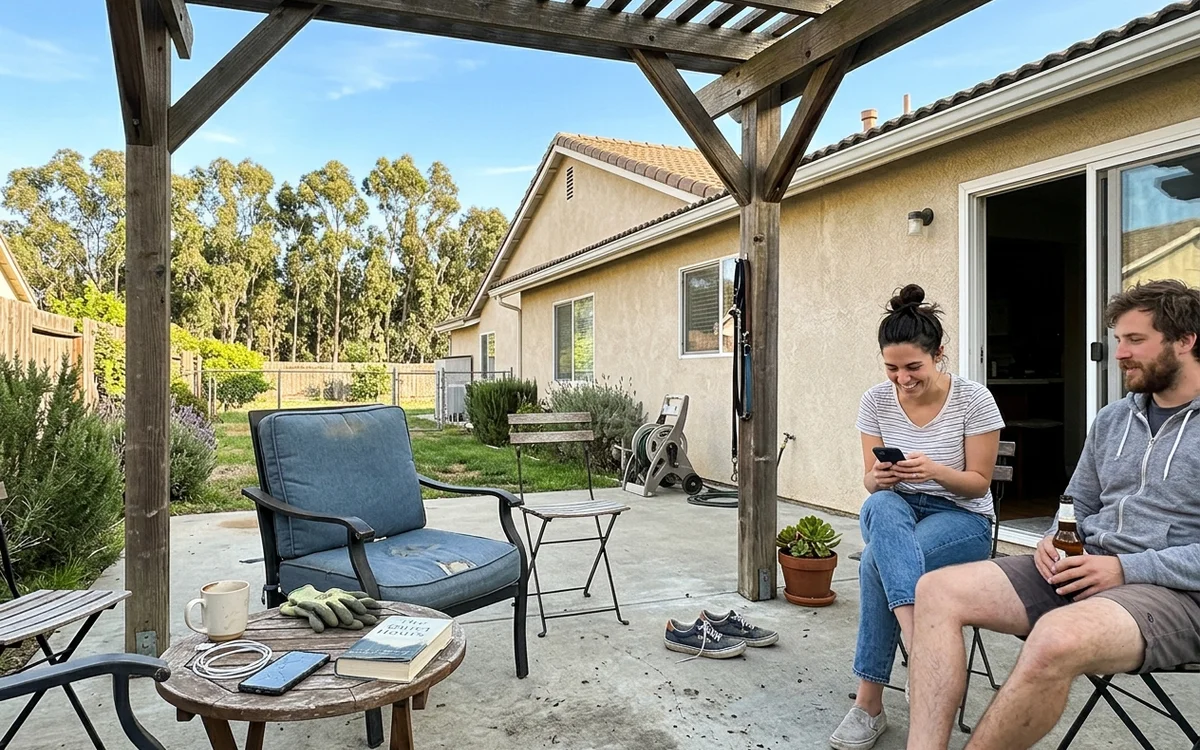
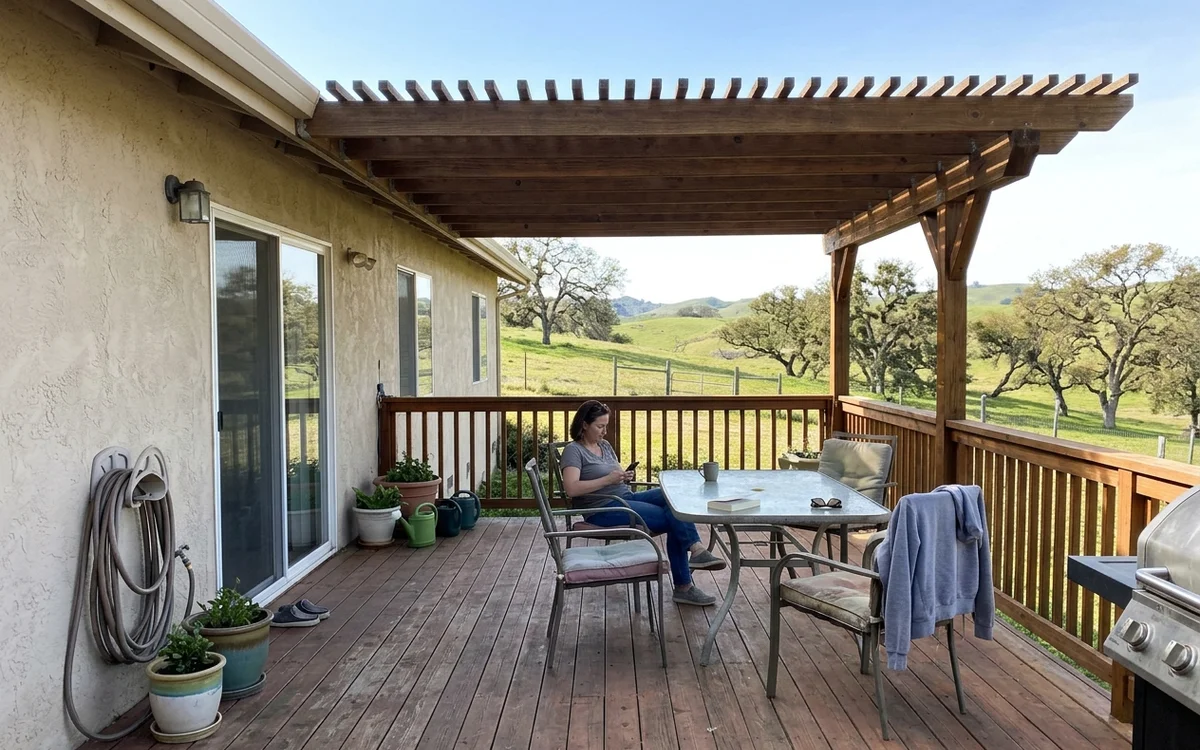
Redwood deck with railing and a wood pergola behind a single-story stucco home, green hills beyond

Get Your FREE Estimate

Tell us your town and the deck work you have in mind. Estimates are free.

Seven kinds of deck work, from one builder

Whether you're starting on bare ground, fixing the deck you have or putting shade over it, it's all deck work, and we do all of it.

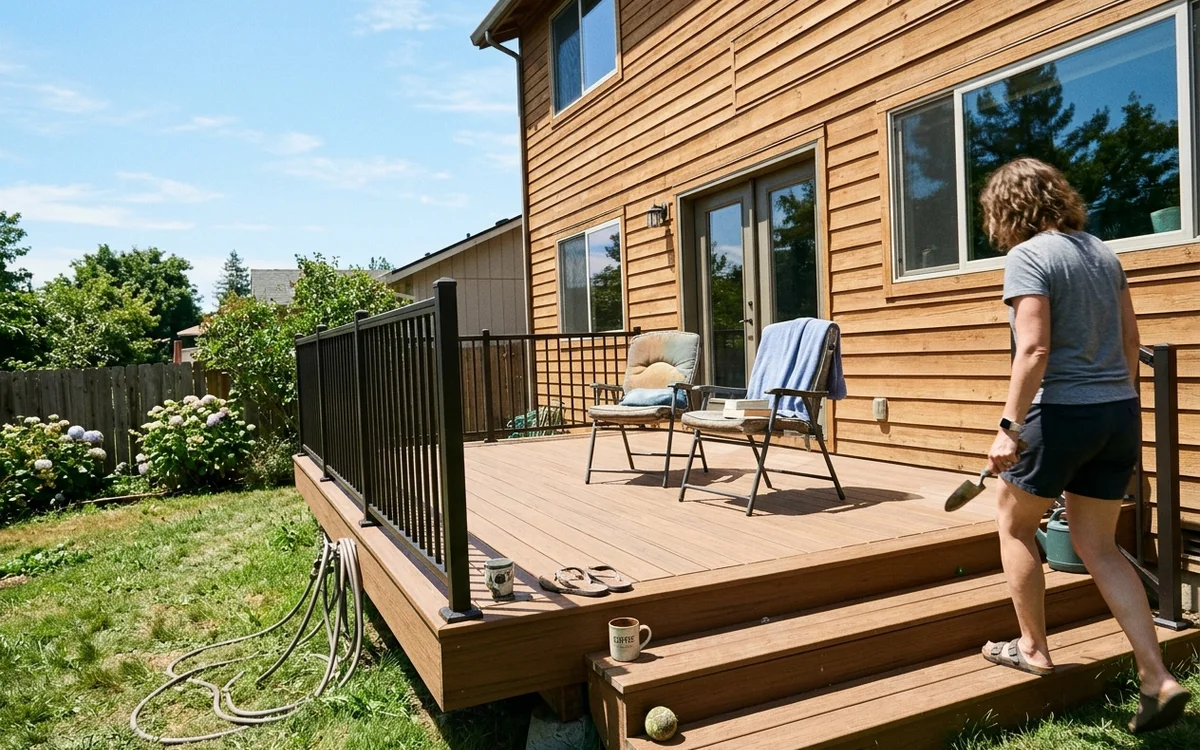
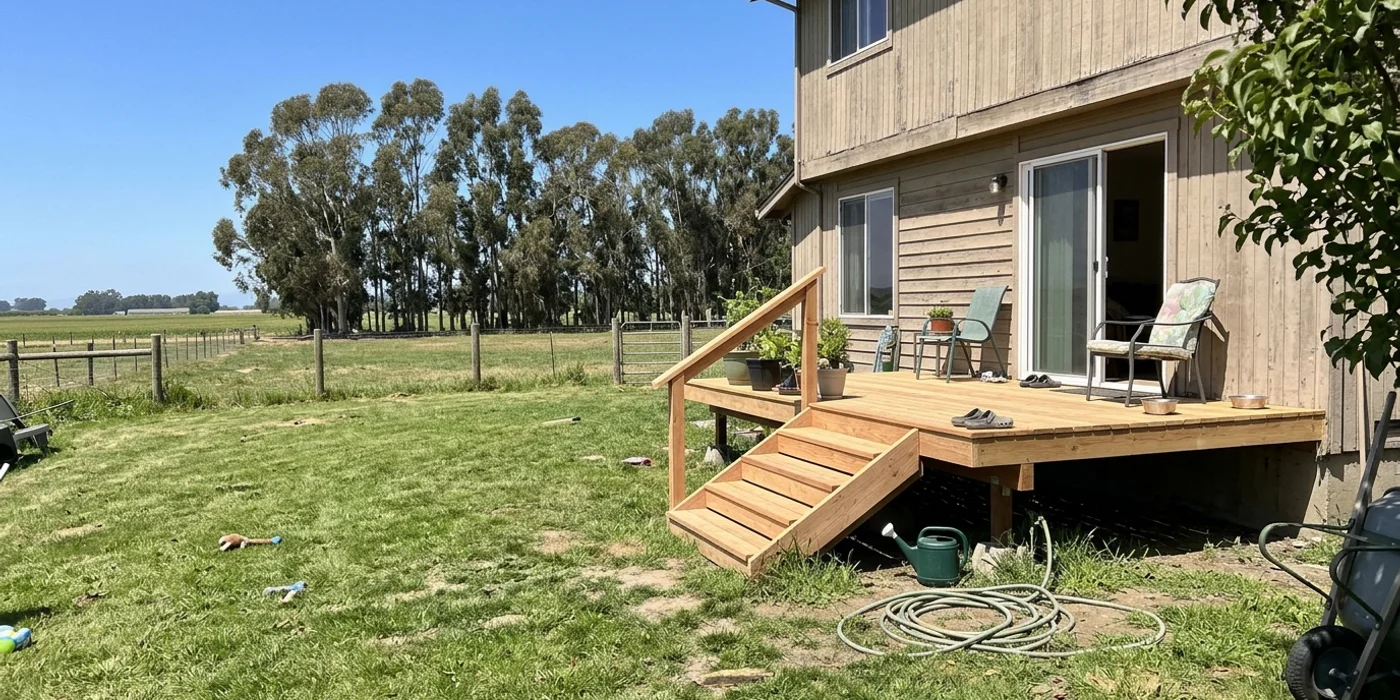
New wood deck with stairs and railing stepping down to a lawn behind a two-story home

Deck Building

New decks from bare ground: the footings, the frame, the boards, stairs and railings, in wood or composite, plus new railings and stairs on decks already there.

Wood: $10,000 to $22,000 Composite: $15,000 to $30,000
Deck building, footings to railing
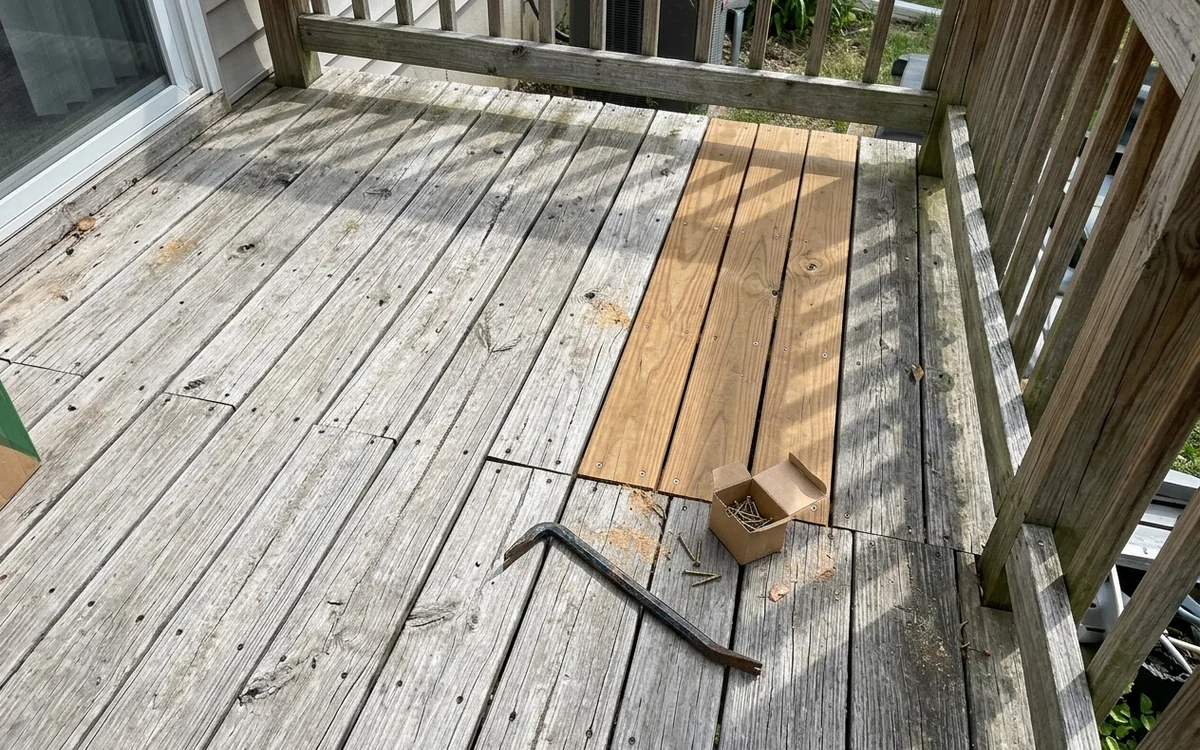
Weathered wood deck with a few new boards set in among older gray boards, railing in view

Deck Repair

Loose or split boards, wobbly railings, tired stairs, posts, joists and footings, on the deck that's already there.

Typical prices for a new deck or a pergola

A typical deck is about 16 by 20 feet off the back of the house, with a few steps down to the yard and railing around it. Bigger, higher or covered decks run above these ranges.

New pressure-treated wood deck

$10,000 to $22,000

A typical new deck in pressure-treated wood, with footings, frame, boards, stairs and railing.

New composite deck

$15,000 to $30,000

The same typical deck with composite boards, stairs and railing.

Wood pergola, about 12 by 12 feet

$2,000 to $7,500

Over a deck or a patio. A pergola set on a deck may need engineering or bigger footings.

Prices for repairs, replacement, staining and railings are on the page for each of those services.

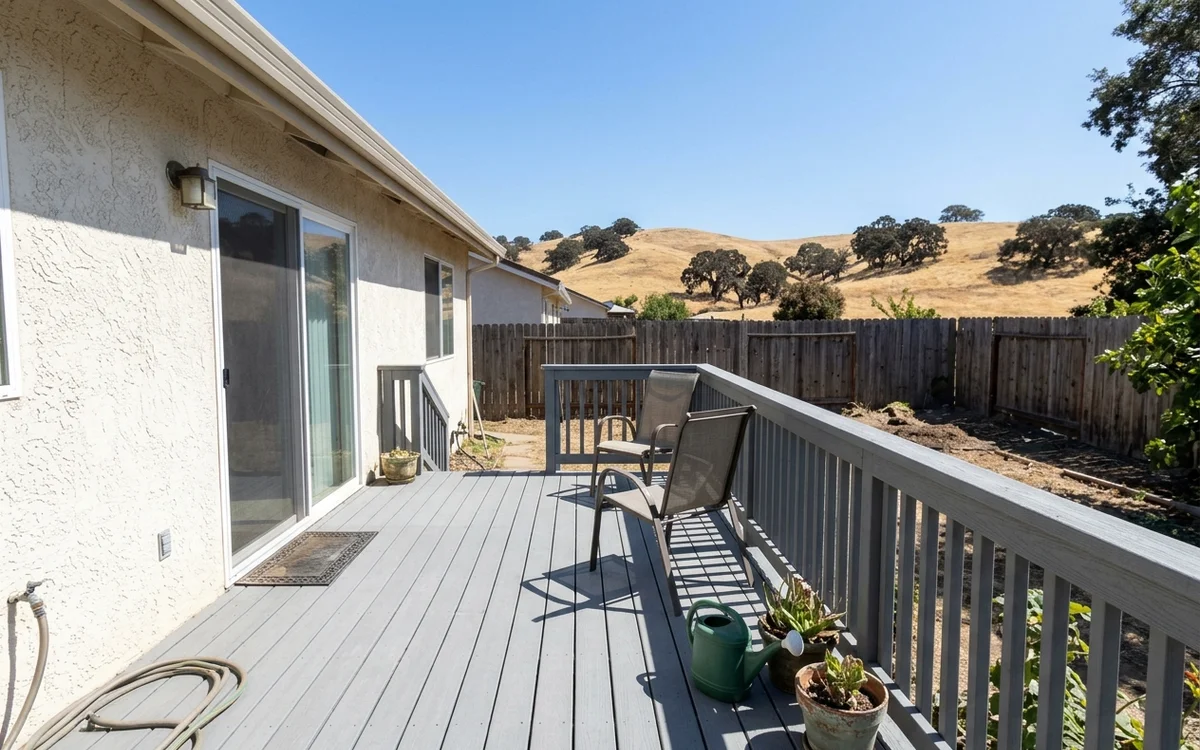
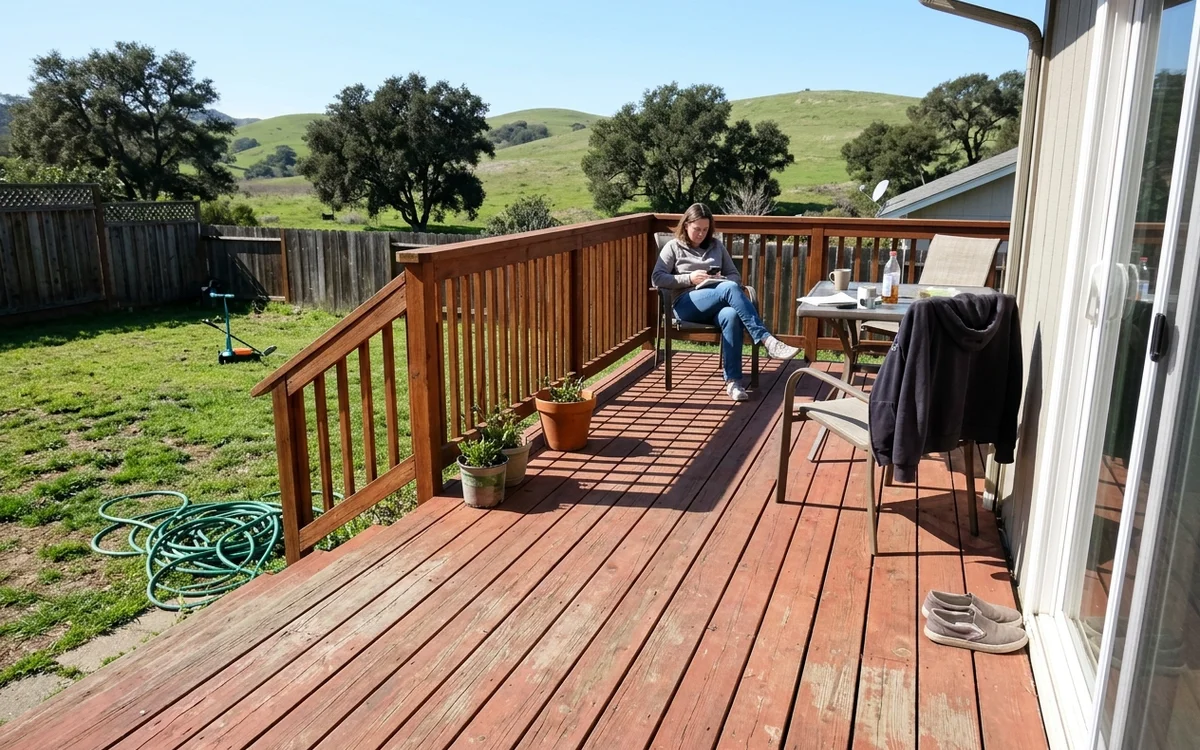
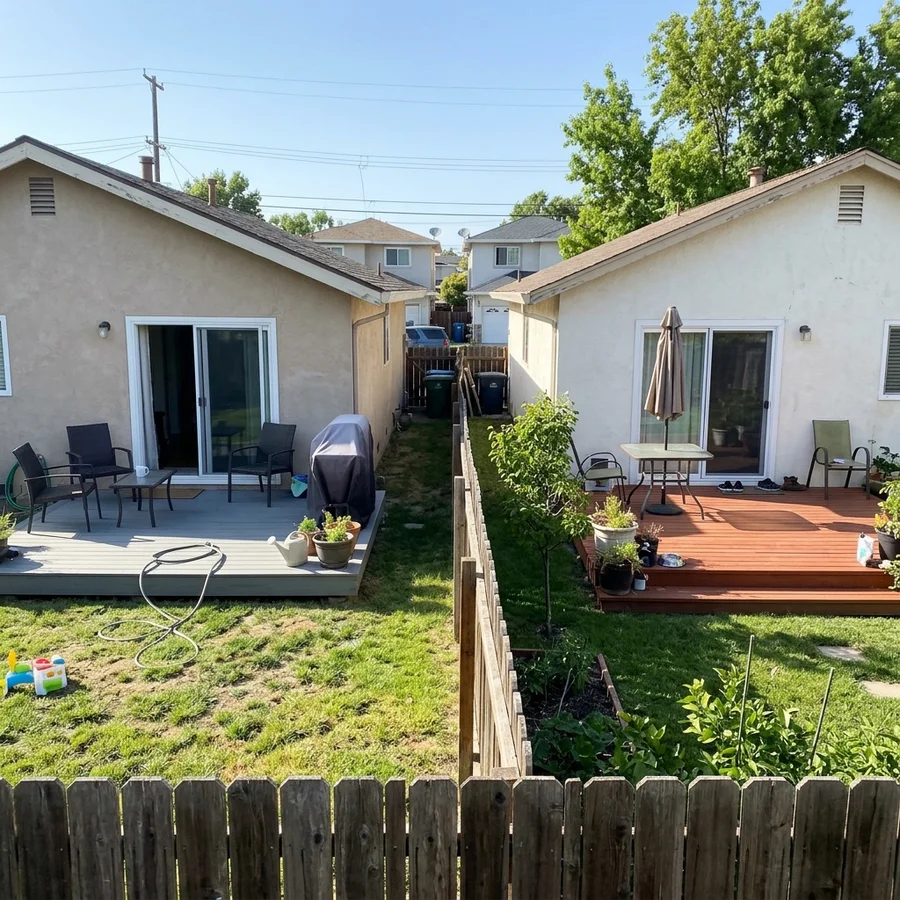
A gray composite deck and a reddish-brown redwood deck in neighboring backyards

Wood or composite boards?

It's usually the first choice on a new deck. Composite decking, which a lot of people call Trex, costs more than wood. It's a deck board made from a blend of wood fiber and plastic.

On the wood side, there are three choices. Redwood costs more than pressure-treated lumber; cedar costs a little more than pressure-treated and less than redwood.

Either way, the frame underneath is the same: footings, posts, beams and joists. We can price your deck both ways so you can see the difference before you decide.

What the weather here does to a deck

The Santa Maria Valley has its own kind of weather. None of it is hard on people, but a deck sits out in all of it.

A funnel for wind and fog

The Santa Maria Valley is shaped like a funnel opening west to the ocean, and the ocean wind and fog come straight up it.

The wind comes from the west and northwest; mornings tend to be calm, and it picks up in the afternoon. That’s worth thinking about when you pick where a deck goes, or whether you want a pergola or patio cover over it.

Fog at night, damp air most of the year

Low cloud and fog come in at night and usually burn off by midday. Fog is a summer and early fall thing here, not just winter, and the air stays damp most of the year.

Mild all year

Rain comes mostly in winter, with almost none in summer, and frost on only a few nights. The warmest days often come in September and October, not midsummer.

Flat wood, mildew and stain

A deck lies flat under sun and weather, and flat wood is often the hardest hit. Mildew grows where a deck stays damp longest (in shade, out of the wind, near plants); it stains wood black but doesn’t rot it, and it gets cleaned off before stain goes on.

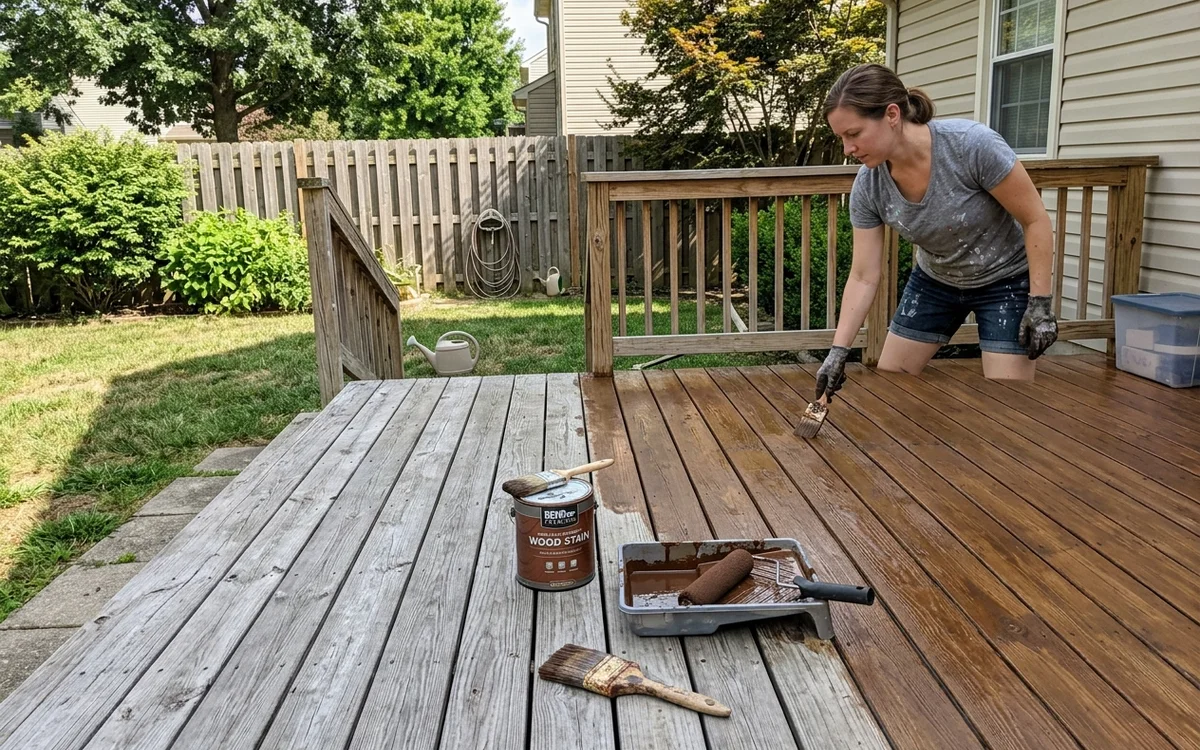
A penetrating stain suits a deck; film finishes tend to peel on a surface you walk on. Plan on a fresh coat of penetrating stain every few years. That’s our deck staining and sealing work.

How it works, from the form to the finished deck

Four plain steps. You start with the estimate form on this page.

  1. Send the estimate form

    Tell us your town, the work you want and anything you know about the deck.

  2. We look at the deck or the yard

    We look at the frame, the footings and the space, and check what permit rules apply.

  3. You get a free estimate

    A clear price for the work, in wood or composite where that's a choice.

  4. We do the work

    Footings, frame, boards, stairs, railing, stain or cover, whatever the job is.

Santa Maria and the towns around it

We build, repair and stain decks for homes in Santa Maria and nearby Orcutt, Nipomo, Arroyo Grande, Lompoc, Grover Beach, Pismo Beach and Guadalupe.

The Santa Maria River marks the county line here: Santa Barbara County on the south side, San Luis Obispo County on the north. Orcutt is unincorporated Santa Barbara County; Nipomo is unincorporated San Luis Obispo County. Each town and county has its own deck rules, and each town page covers what applies there.

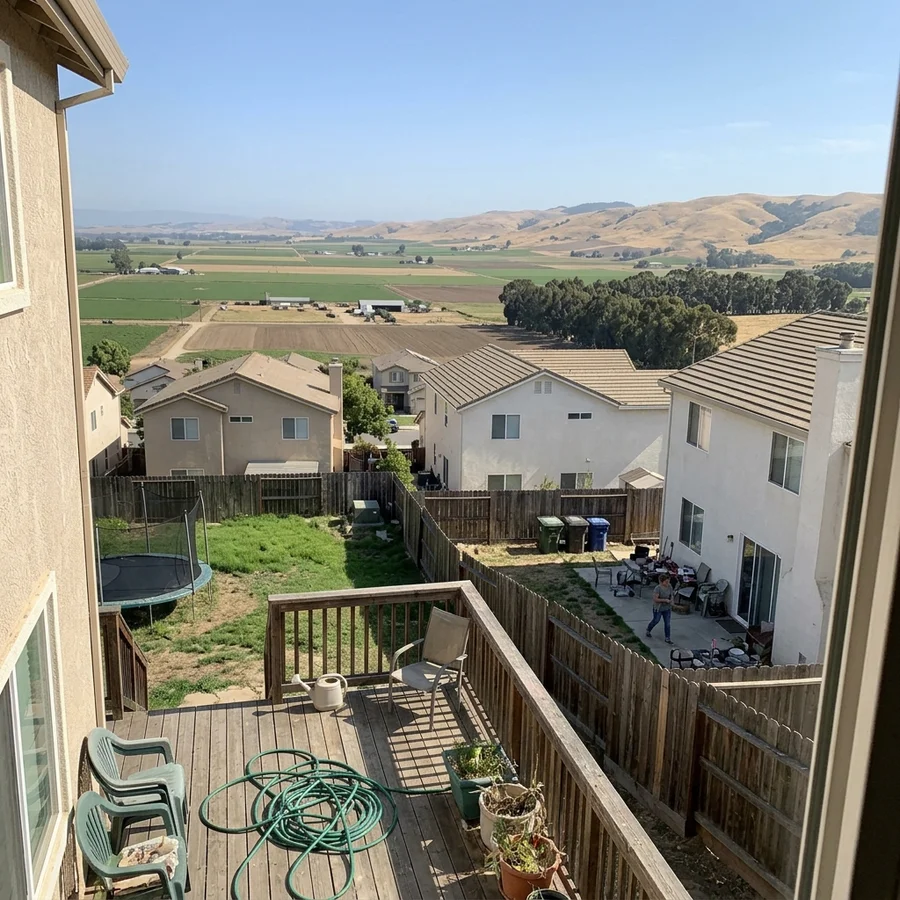
Valley farm fields, eucalyptus windbreaks and golden hills behind a row of stucco homes
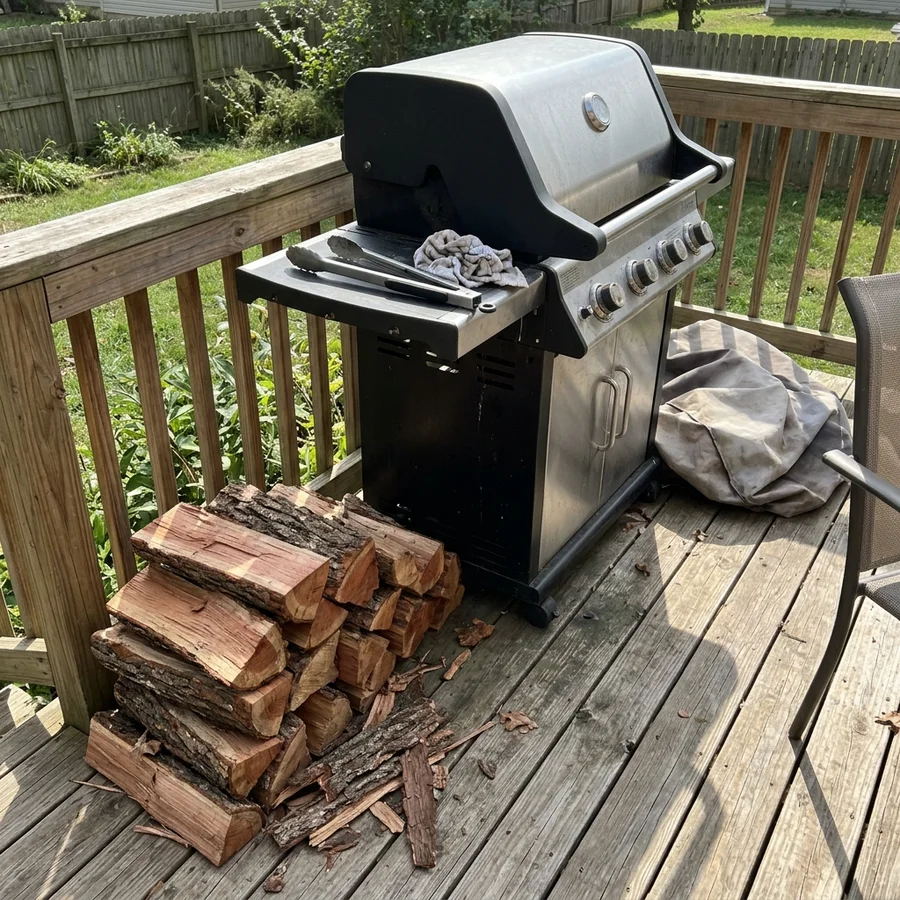
Backyard wood deck with a barbecue grill and a stack of oak firewood by the railing

A little Santa Maria history

Santa Maria began as Central City, laid out where four settlers' land met at what is now Broadway and Main. It changed its name because its mail kept going to Central City, Colorado.

Santa Maria-style barbecue grew out of the old rancho barbecues in this valley: beef cooked over the coals of a red oak fire.

Strawberries are Santa Barbara County's top crop, and the Santa Maria Valley is one of California's officially recognized wine-grape regions.

Deck questions people ask us

How much does a deck cost?

A typical deck around Santa Maria, about 16 by 20 feet off the back of the house with a few steps down to the yard and railing around it, costs $10,000 to $22,000 in pressure-treated wood and $15,000 to $30,000 in composite. Bigger, higher or covered decks run above those ranges.

How much does a 14x20 deck cost?

A 14 by 20 deck comes in under the typical ranges. A typical 16 by 20 deck around Santa Maria costs $10,000 to $22,000 in pressure-treated wood and $15,000 to $30,000 in composite, and price follows size, so a smaller deck costs less than that.

Do you need a permit to build a deck in California?

It depends on the deck and the town. California's rule lets a small, low, freestanding deck go without a building permit: 200 square feet or less, no more than 30 inches off the ground at any point, not attached to the house, and not serving the door the code requires as the way out of the house. Santa Maria keeps that rule, and an attached deck there needs a permit at any height. In Orcutt, in unincorporated Santa Barbara County, a deck needs a county building permit if any part of it is more than 30 inches off the ground, if it sits over a basement or a floor below, if it holds up a structure above it, or if it is part of an accessible route. Other towns set their own rules, and we check what applies to yours.

Ready to talk about your deck?

Send the estimate form at the top of this page with your town and the work you have in mind. Estimates are free.

Get Free Estimate